Attribute
Detail
Format
Recorded Lectures (Self-Paced)
Level
Advanced
Duration
3 Days
Certification
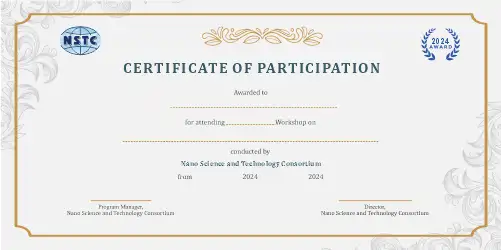
e-Certification + e-Marksheet
Tools
Python, NLTK, spaCy, Hugging Face Transformers, Gensim, BERT
About the Natural Language Processing Fundamentals Course
The Advanced NLP Virtual Course is a three-day program designed for academicians, PhD scholars, and faculty to explore cutting-edge NLP techniques, tools, and applications.
Participants will delve into advanced concepts like transformers, domain-specific NLP, and ethical challenges while gaining hands-on experience with tools like Hugging Face and spaCy. The course empowers attendees to lead impactful research, innovate in NLP applications, and contribute to the future of the field.
Program Highlights
• Comprehensive coverage of Natural Language Processing Fundamentals from fundamentals to advanced applications
• Hands-on projects and real-world case studies in Natural Language Processing
• Expert-curated curriculum aligned with current industry standards
• Access to recorded lectures and e-LMS platform for flexible, self-paced learning
• e-Certification and e-Marksheet upon successful completion
• Dedicated mentor support and interactive doubt-clearing sessions
• Exposure to industry-standard tools and platforms used in Natural Language Processing
• Career-oriented training for academic and professional growth in Natural Language Processing
Course Curriculum
Module 1: Introduction to Natural Language Processing Fundamentals
- Overview and historical evolution of Natural Language Processing Fundamentals
- Key terminology, definitions, and core concepts in Natural Language Processing
- Current industry landscape, trends, and career opportunities
- Setting up the learning environment and essential tools
Module 2: Fundamentals and Theoretical Foundations
- Core principles and scientific/theoretical underpinnings of Natural Language Processing Fundamentals
- Mathematical and analytical frameworks relevant to Natural Language Processing
- Comparative analysis of major approaches and methodologies
- Understanding key standards, guidelines, and best practices
Module 3: Understanding Human Language with AI
- Core concepts and techniques in Understanding Human Language with AI
- Practical implementation and hands-on exercises
- Integration of Understanding Human Language with AI with Natural Language Processing Fundamentals workflows
- Case study: Real-world application of Understanding Human Language with AI
Module 4: Text Processing
- Introduction to Text Processing concepts and methodologies
- Step-by-step practical implementation of Text Processing techniques
- Tools and platforms commonly used for Text Processing
- Troubleshooting, optimization, and best practices
Module 5: Sentiment Analysis
- Introduction to Sentiment Analysis concepts and methodologies
- Step-by-step practical implementation of Sentiment Analysis techniques
- Tools and platforms commonly used for Sentiment Analysis
- Troubleshooting, optimization, and best practices
Module 6: Advanced Topics and Emerging Trends in Natural Language Processing
- Cutting-edge research and innovations in Natural Language Processing Fundamentals
- Integration with AI, automation, and modern technologies
- Industry case studies and real-world problem solving
- Future directions and career pathways in Natural Language Processing
Module 7: Capstone Project and Assessment
- End-to-end project implementation using Natural Language Processing Fundamentals skills
- Peer review, collaborative exercises, and expert feedback
- Portfolio-ready project documentation and presentation
- Final assessment and course completion evaluation
Tools, Techniques, or Platforms Covered
Python
NLTK
spaCy
Hugging Face Transformers
Gensim
BERT
GPT
Real-World Applications
- Apply Natural Language Processing Fundamentals skills directly to academic research, thesis work, and publications
- Build a professional portfolio showcasing practical Natural Language Processing competencies
- Solve industry-relevant problems using Natural Language Processing Fundamentals methodologies and tools
- Contribute to open-source projects and collaborative research in Natural Language Processing
- Prepare for competitive examinations, interviews, and professional certifications in Natural Language Processing
Who Should Attend & Prerequisites
- Students pursuing degrees in Natural Language Processing, science, engineering, or related disciplines
- Working professionals seeking to upskill or transition into Natural Language Processing roles
- Researchers and academicians looking to adopt modern techniques in Natural Language Processing
- Entrepreneurs, freelancers, and self-learners interested in practical Natural Language Processing knowledge
Prerequisites: Prior experience with Natural Language Processing fundamentals or a related discipline is recommended. Basic programming knowledge may be helpful depending on the course modules.
Frequently Asked Questions
1. What is the format of this Natural Language Processing Fundamentals: Understanding Human Language with AI course?
This is an Recorded Lectures (Self-Paced) course delivered via our e-LMS platform. You will have access to pre-recorded video lectures, reading materials, assignments, quizzes, and hands-on projects that you can complete at your own pace.
2. Will I receive a certificate after completing this course?
Yes! Upon successful completion of all modules, assignments, and assessments, you will receive an e-Certification along with an e-Marksheet from NanoSchool (NSTC) that you can showcase on your CV and LinkedIn profile.
3. What are the prerequisites for this course?
Learners should have a foundational understanding of Natural Language Processing concepts. Familiarity with basic tools and programming is recommended.
4. How long will I have access to the course materials?
You will have access to all course materials for the duration of 3 Days. The self-paced format allows you to learn according to your own schedule through our online learning management system.
5. Is mentor support available during the course?
Yes, dedicated mentor support is available throughout the course. You can reach out for doubt-clearing sessions, project guidance, and career advice related to Natural Language Processing. Our mentors are industry experts and experienced professionals.
Enroll in Natural Language Processing Fundamentals: Understanding Human Language with AI today and take the next step in your professional journey. With expert-curated content, practical projects, and industry-recognized certification, this course is your gateway to mastering Natural Language Processing skills that matter.

 CRISPR-Cas Genome Editing: Tools & Techniques
1 × INR ₹2,499.00
 Epigenetic Mechanisms in Gene Regulation
1 × INR ₹2,249.00
 Introduction to Antimicrobial Resistance Analysis
1 × INR ₹199.00
 AI Driven CRISPR Guide RNA Design and Off Target Prediction
1 × INR ₹2,499.00
 Genetic Engineering in Agricultural Biotechnology
1 × INR ₹1,249.00
 Basics of Time Series Forecasting
1 × INR ₹199.00
 AI Leadership and Strategy: Transforming Business with Artificial Intelligence
1 × INR ₹2,499.00
 MLOps: Machine Learning Operations Course
1 × INR ₹2,499.00
 AI Bias Auditing and Explainability in Practice
1 × INR ₹10,749.00
 Smart PCR and Primer Design with AI Course | Molecular Biology
1 × INR ₹5,499.00