Internship Details
Attribute
Detail
Format
Online, Live + LMS
Level
Intermediate
Recommended Duration
6 Weeks
Certification
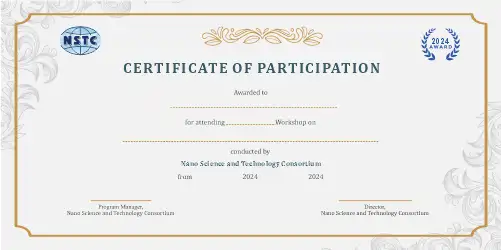
e-Certification + e-Marksheet
Category
Network Pharmacology, Molecular Docking and Multi-Target Drug Discovery Internship
Tools
PubChem, STRING, Cytoscape, cytoHubba, MCODE, ClueGO, AutoDock Vina, PyRx, Open Babel, RDKit, PyMOL, ChimeraX, Google Colab
About the Internship
The Network Pharmacology and Molecular Docking for Multi-Target Drug Discovery Internship is a project-based programme designed to investigate how drugs, natural products, medicinal plants, and bioactive compounds act through multiple compounds, targets, pathways, and disease mechanisms.
Participants will collect active compounds, standardize chemical structures, apply drug-likeness and ADME screening, predict compound targets, collect disease-associated genes, identify common targets, and construct compound-target and protein-interaction networks.
The internship further integrates Cytoscape-based network analysis, GO and pathway enrichment, molecular docking, interaction analysis, and multi-target mechanism interpretation for research-style reporting.
Internship Objective
To investigate the multi-component and multi-target mechanisms of drugs, natural products, medicinal plants, or bioactive compounds using network pharmacology, protein-interaction analysis, pathway enrichment, and molecular docking.
Program Highlights
• Active compound collection and standardization
• Drug-likeness, ADME, and target screening
• Disease-gene and common-target identification
• STRING and Cytoscape network analysis
• GO, KEGG, and Reactome enrichment
• Molecular docking and mechanism interpretation
Suitable Project Themes
- Medicinal plant pharmacology
- Natural-product drug discovery
- Cancer therapeutics
- Anti-inflammatory compounds
- Neuroprotective compounds
- Antidiabetic compounds
Hands-on Activities
- Select a medicinal plant, natural compound, formulation, or approved drug.
- Collect active compounds and standardize compound structures.
- Apply drug-likeness and ADME screening filters.
- Predict compound targets and collect disease-associated genes.
- Identify common compound-disease targets.
- Construct compound-target and protein-interaction networks.
- Identify hub targets and functional modules.
- Perform Gene Ontology, KEGG, and Reactome enrichment analysis.
Core Network Pharmacology Skills
- Compound database preparation and chemical-structure standardization
- Drug-likeness, ADME, and target-screening interpretation
- Disease-gene collection and common-target identification
- Protein-interaction network construction and Cytoscape analysis
- Hub-target detection, module analysis, and pathway enrichment
- Molecular docking, binding-interaction analysis, and mechanism modeling
Internship Curriculum
Week 1: Compound Collection and Standardization
- Select the therapeutic system, medicinal plant, drug, or compound group.
- Collect active compounds from relevant resources.
- Retrieve molecular structures and compound identifiers.
- Remove duplicate compounds and inconsistent records.
- Standardize compound names, IDs, and structures.
- Calculate basic molecular descriptors.
Week 2: Pharmacokinetic and Target Screening
- Evaluate drug-likeness properties.
- Review absorption, distribution, metabolism, and related parameters.
- Predict compound-associated targets.
- Prepare compound-target tables.
- Organize targets for downstream disease-intersection analysis.
Week 3: Disease Target Collection
- Retrieve disease-associated genes from compatible resources.
- Clean and standardize disease-gene identifiers.
- Identify intersecting compound and disease targets.
- Prepare common-target tables.
- Rank targets for network construction and prioritization.
Week 4: Protein Interaction and Hub-Target Analysis
- Develop the STRING protein-interaction network.
- Import the interaction network into Cytoscape.
- Calculate centrality and network-topology parameters.
- Identify hub targets using ranking methods.
- Detect functional modules and subnetworks.
Week 5: Functional and Pathway Enrichment
- Perform Gene Ontology analysis.
- Conduct KEGG pathway analysis.
- Perform Reactome pathway interpretation.
- Identify major biological processes and mechanisms.
- Select major pathways for network and mechanism modeling.
Week 6: Network Construction
- Construct compound-target networks.
- Develop target-pathway networks.
- Build compound-target-pathway networks.
- Create disease-mechanism network models.
- Generate publication-quality Cytoscape visualizations.
Week 7: Molecular Docking
- Select key target proteins for docking.
- Prepare protein structures and binding sites.
- Prepare ligand structures and docking files.
- Perform molecular docking using suitable tools.
- Analyze binding scores and interacting residues.
Week 8: Integrated Mechanism and Reporting
- Combine network pharmacology and docking results.
- Propose multi-target mechanisms of action.
- Discuss biological evidence, limitations, and interpretation.
- Prepare the final report and mechanism diagram.
- Present the final project and complete the technical viva.
Tools and Platforms Covered
PubChem
ChEMBL-Compatible Resources
SwissTargetPrediction-Compatible Resources
BindingDB-Compatible Resources
GeneCards-Compatible Resources
DisGeNET-Compatible Resources
STRING
Cytoscape
cytoHubba
MCODE
ClueGO
AutoDock Vina
PyRx
Open Babel
RDKit
Final Deliverables
- Active-compound database
- Drug-likeness and ADME report
- Compound-target table
- Disease-gene table
- Common-target analysis
- STRING protein-interaction network
- Cytoscape network and session file
- Hub-target ranking
Network Pharmacology of Curcumin in Breast Cancer
Multi-Target Mechanism of Withania somnifera in Neurodegenerative Disease
Network Pharmacology and Docking Analysis of Natural Compounds Against Diabetes
Systems Pharmacology of Plant-Derived Anti-Inflammatory Compounds
Network-Based Drug Repurposing for Viral Infection
Network Pharmacology of Bioactive Compounds in Cardiovascular Disease
Real-World Applications
- Natural-product and medicinal-plant mechanism discovery
- Multi-target drug discovery and drug repurposing
- Identification of disease-relevant hub targets and pathways
- Validation of traditional medicine through computational evidence
- Docking-based screening of bioactive compounds against disease targets
- Mechanistic interpretation of compound-target-pathway-disease relationships
Who Should Attend & Prerequisites
- Biotechnology, bioinformatics, pharmacy, and life-science students
- Pharmaceutical science and drug-discovery learners
- Researchers working on medicinal plants and natural products
- PhD scholars interested in systems pharmacology and docking
- Faculty members and early-career researchers in computational biology
- Learners interested in multi-target therapeutics and traditional medicine validation
Prerequisites: Basic knowledge of biology, pharmacology, molecular targets, and bioinformatics is recommended. Familiarity with Cytoscape, molecular docking, or Google Colab will be helpful but is not mandatory.
Frequently Asked Questions
1. What is this network pharmacology internship about?
This internship focuses on identifying how drugs, medicinal plants, natural products, or bioactive compounds may act on multiple disease-related targets and pathways using network pharmacology and docking.
2. Will molecular docking be included?
Yes. Participants will select key targets, prepare proteins and ligands, perform docking, and analyze binding interactions and residues.
3. Can this internship be used for medicinal plant research?
Yes. The workflow is suitable for medicinal plants, natural compounds, approved drugs, formulations, and drug-repurposing projects.
4. Which networks will participants construct?
Participants will construct compound-target networks, protein-interaction networks, target-pathway networks, compound-target-pathway networks, and disease-mechanism networks.
5. What will participants submit after completion?
Participants will submit compound databases, target tables, disease-gene tables, STRING and Cytoscape networks, hub-target rankings, enrichment results, docking outputs, mechanism diagrams, and a research-style report.
The Network Pharmacology and Molecular Docking for Multi-Target Drug Discovery Internship provides practical training in compound collection, drug-likeness screening, target prediction, disease-gene analysis, protein-interaction networks, pathway enrichment, molecular docking, and integrated mechanism modeling for natural-product pharmacology, drug discovery, and systems medicine research.

 AI for Fraud Detection in BFSI: Navigating Financial Integrity Course
1 × INR ₹5,499.00
 Bioinformatics for Industrial Biotechnology Course
1 × INR ₹5,499.00
 Regression Analysis with Python
1 × INR ₹199.00